
Sprinkler Valves
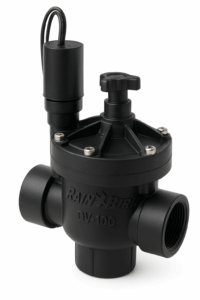 Everything You Need to Know About Lawn Sprinkler Valves
Look, I’ll be honest with you. Most people don’t think about their sprinkler valves until something goes wrong. Then suddenly you’ve got a geyser in your front yard or a dead brown patch that looks like someone torched it. I repair sprinklers in Central Florida and one of the most jobs I do is rebuilding or replacing irrigation valves.
Think of sprinkler valves like traffic lights for water. They tell the water when to go and when to stop. Pretty simple, right?
Here’s how it works. Your sprinkler timer (that box in your garage or outside) sends a signal to the valve. The valve opens up. Water rushes through to your sprinklers. Timer says stop. Valve closes. Done.
Inside each valve, there’s this thing called a solenoid. It’s basically a magnet that gets powered up when the timer tells it to work. That magnet pulls up a plunger, which opens a rubber piece called a diaphragm. Water flows. When the power stops, everything closes back up.
Not rocket science. But knowing this stuff helps when things break.
The Big Brands You’ll See
Rain Bird –
These guys are everywhere. You’ve probably seen their name even if you didn’t know what it was. Their valves are tough. Really tough. The 100-DV series is what most sprinkler pros use for regular homes. They’re made from this special plastic that doesn’t crack in the sun or fall apart underground. Worth the extra money? Yeah, usually.
Hunter –
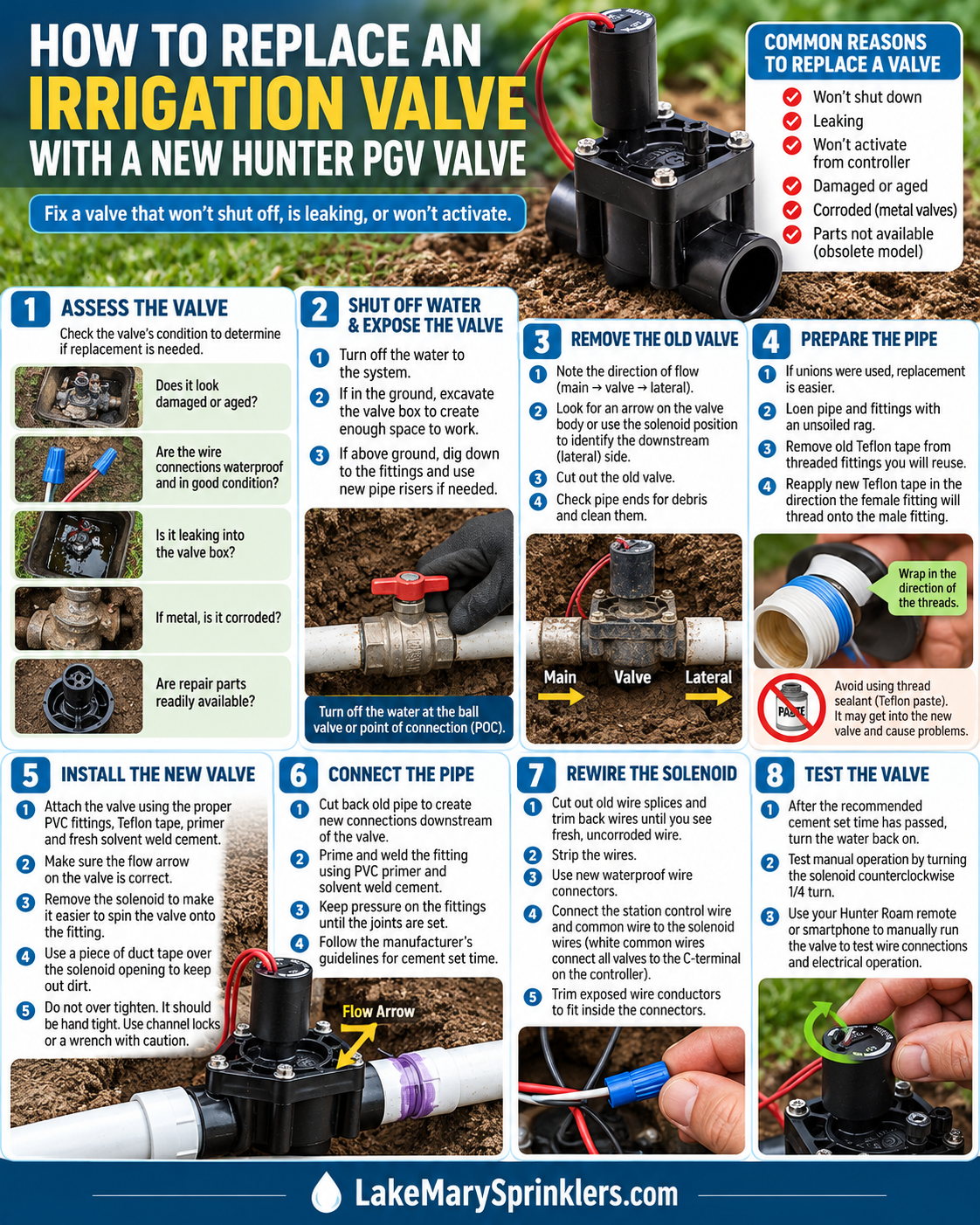
Just as good as Rain Bird, honestly. Some people swear by them. Their PGV valves are super popular because they’re easy to work on. There’s this little screw on top that lets you turn the valve on manually. No electricity needed. Great for testing if something’s broken.
Orbit –
Now we’re talking budget friendly. You’ll find these L Series at Home Depot or Lowe’s. They work fine. They won’t last as long as the fancy brands, but who cares if they cost half as much? Plus they’re easier to fix yourself because of how they’re designed.
Irritrol –
Solid middle ground. Toro bought them out a while back. Their 2400 series valves handle pretty much anything you throw at them. Good choice if you’ve got weird water pressure issues.
Toro –
Yeah, the lawn mower people. They make valves too. Pretty good ones, actually. Golf courses use them a lot, which tells you something.
When Valves Go Bad
Valves mess up in predictable ways. Here’s what usually happens:
Won’t turn on?
Could be the wires are broken. Could be the solenoid died. Could be something’s stuck inside. Start by checking if the controller is actually sending power to the valve.
Won’t turn off?
That’s annoying. Usually means the diaphragm ripped or there’s dirt stuck where it’s supposed to seal. Sometimes the solenoid gets stuck too.
Leaking water?
Check where it’s coming from. Leaking from the top? Probably a bad gasket or the solenoid’s loose. Leaking from the bottom or sides? The valve body itself might be cracked.
Weak water pressure?
The flow control screw might be turned down. Or crud built up inside. Or the diaphragm’s not opening all the way.
I once had a valve that would randomly turn on at 2 AM. Scared the heck out of my dog. Turned out a wire was nicked and would short out when it got wet from dew. Fixed it with new wire and some waterproof connectors. Problem solved.
Fixing Them Yourself
You don’t need to be a plumber. Seriously. Most valve repairs are pretty straightforward.
Swapping Out a Solenoid
This is the easiest fix ever.
Turn off your controller. Just unplug it or turn it to “off.” You don’t even need to shut off the water for this one.
Now turn off the water.
The solenoid is that cylindrical thing sticking up from the valve. Twist it counterclockwise. It’ll unscrew by hand. If it’s really stuck, use channel locks but be gentle.
Look at the little plunger inside. Clean it if it’s dirty. Screw in the new solenoid. Connect the wires back. Test it.
Ten minutes, tops.
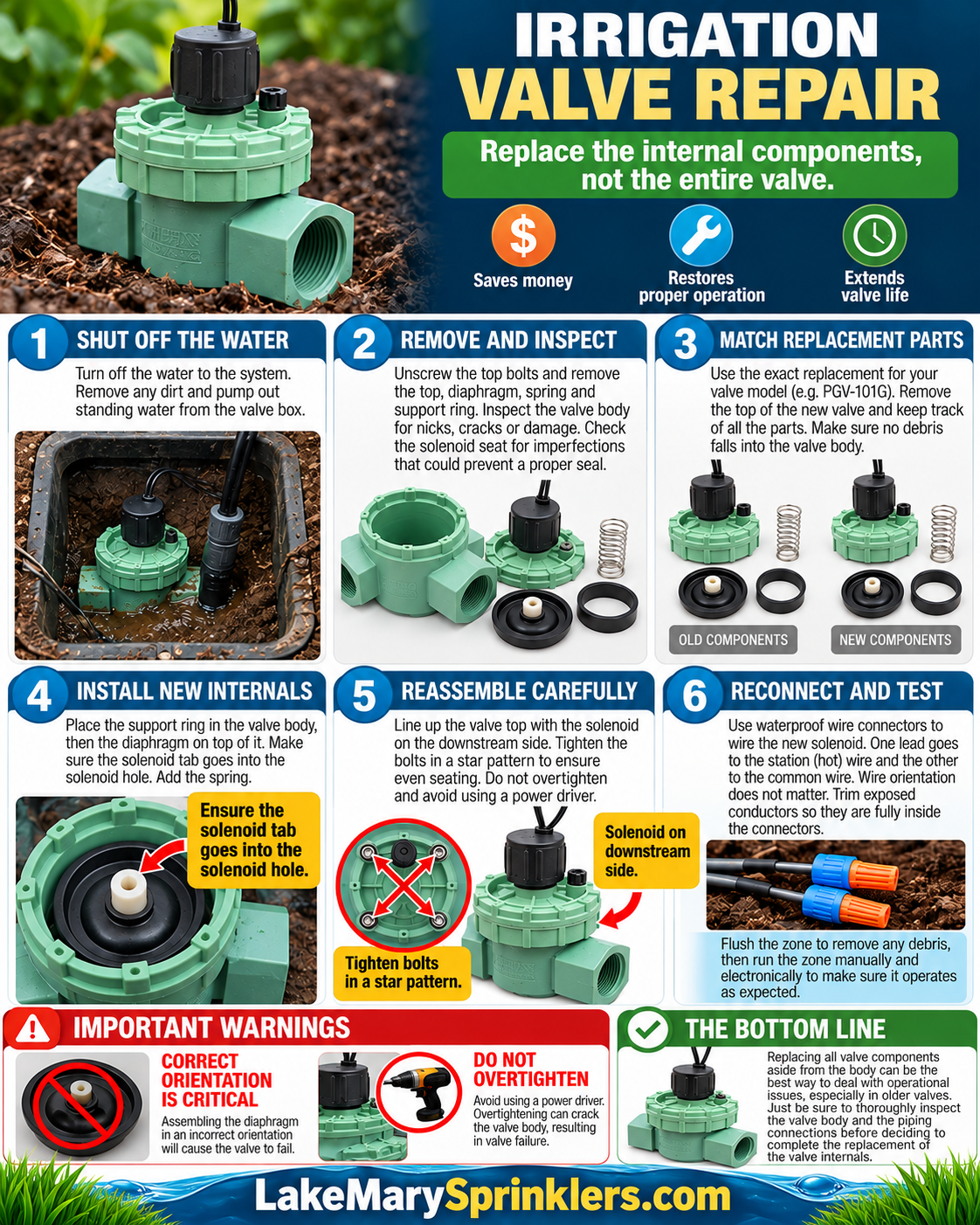
Changing the Diaphragm
This one takes a bit more work, but it’s still doable.
First, turn off the water to that valve. There should be a shutoff somewhere, or just turn off your whole sprinkler system.
Most valves have screws holding the top on. Take them out. Some Orbit valves just unscrew like a jar. Way easier.
Inside you’ll see a spring and a rubber disc. That’s the diaphragm. Pull it out.
Check it for holes or tears. Even tiny ones cause problems. If it’s messed up, toss it.
Here’s the important part – clean everything. I mean really clean it. Any little piece of dirt or sand will make your new diaphragm fail. Use water and maybe an old toothbrush.
Put in the new diaphragm. Make sure it sits flat in the groove. Put the spring back. Put the top back on. Tighten the screws evenly – like you’re tightening lug nuts on a car tire. Alternate between screws so it goes on straight.
Turn the water back on slowly. Check for leaks. If it’s dry, you’re golden.
Getting Rid of Junk Inside
Sometimes valves just get clogged. Dirt happens.
Open the valve like you would for a diaphragm replacement. Rinse everything out good. There’s a tiny hole in the valve body that water has to flow through. Make sure that’s clear. A piece of wire works great for poking it clean.
Some people use compressed air. Works fine, just don’t go crazy with it.
If you keep getting dirt in your valves, consider adding a filter screen upstream. They’re cheap and they work.
Adjusting Water Flow
See that screw on the side or top of your valve? That’s the flow control.
If your sprinklers seem weak, try turning it counterclockwise. That opens it more. Go slow – small turns make big differences.
If your sprinklers are too strong and water’s just flying everywhere, turn it clockwise a bit.
Keeping Them Happy
A little maintenance goes a long way.
Start of season: Turn on each zone manually. Watch for leaks. Listen for weird sounds. A healthy valve makes a solid “click” when it turns on.
End of season: If you live where it freezes, blow out your lines or drain them. Water left in valves will freeze and crack them. Not fun to discover in spring.
Year-round: Make sure your valve boxes (those green plastic covers in your yard) aren’t full of water. Valves sitting in water rot faster. Drill some drain holes if you need to.
Mark where your valves are. Draw a map. Take pictures. Future you will thank present you when you need to find them.
When Things Get Weird
Sometimes you run into oddball problems.
Got a multimeter? Check if there’s 24 volts at the valve when the zone turns on. No voltage? Problem’s with your wires or controller. Got voltage but valve won’t work? Problem’s with the valve itself.
Most valves have a manual override. Usually a screw or lever you can turn by hand. If the valve works manually but not electrically, you know it’s an electrical issue. Narrows things down fast.
Check your water pressure. You need at least 30 PSI for sprinklers to work right. Low pressure at one valve but not others? Something’s blocking that line. Low pressure everywhere? That’s a bigger problem with your water supply.
Wire connections go bad. Especially the ones buried underground. If a zone works sometimes but not always, I’d bet money on a corroded wire connection. Use proper waterproof connectors and that grease stuff (dielectric grease) to protect them.
The Bottom Line
You don’t need to be scared of sprinkler valves. They’re pretty simple machines when you break them down. A few basic parts. Water goes in, water goes out, and electricity controls the whole thing.
Can you fix most problems yourself? Absolutely. Should you? Depends. If you’re handy and want to save money, go for it. If wrenches give you anxiety, call a pro. No shame either way.
But at least now you know what’s going on when they tell you “the diaphragm’s shot” or “the solenoid’s fried.” You’ll know if they’re being straight with you or trying to sell you stuff you don’t need.
Your lawn’s counting on these valves to keep it green. Give them a little attention and they’ll do their job for years. Ignore them and you’ll be dealing with floods or droughts.