
Backflow + Testing Information Central Florida
Backflow Prevention in Florida Homes: What You Really Need to Know
Let’s talk about something most homeowners don’t think about until there’s a problem: backflow prevention. Sounds boring, right? But here’s the thing – this stuff actually matters, especially if you live in Florida, especially if you have lawn sprinklers.
So What Even Is Backflow?
Picture this: you’re watering your lawn with fertilizer mixed in. Suddenly, the water main down the street breaks. Water stops flowing forward and starts sucking backward instead. Now all that fertilizer-filled water? It’s heading straight back into your drinking water pipes. Gross.
That’s backflow. And it’s exactly why Florida takes backflow prevention so seriously.
There are two main ways this happens. Back-pressure is when water gets pushed the wrong way – like when a pump is too strong. Back-siphonage is when water gets sucked backward – like through a straw – usually because pressure dropped somewhere in the system.
In Florida, we’ve got irrigation systems everywhere. Pools in half the backyards. Chemical feeders. Water features. All of this creates more chances for backflow problems than in most other states.
The Different Types of Backflow Preventers
Not all backflow preventers are created equal. Some are simple. Others are pretty complex. Let’s break them down.
Atmospheric Vacuum Breakers (The Basic Option)
These are the cheapest and simplest devices you’ll find. They work by letting air into your pipes when pressure drops. Think of it like breaking a seal on a straw – once air gets in, you can’t suck anything up anymore.
You’ll see these on:
- Outdoor faucets
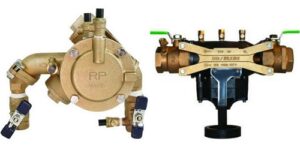
reduced pressure principle backflow - Simple hose connections
- Basic sprinkler setups

But they have limits. Number one, they are no longer legal for new irrigation installs. Number two they can’t handle back-pressure at all. Only back-siphonage. Plus, they need to be installed at least six inches above whatever they’re protecting. And they can’t be under pressure all the time – only about 12 hours max.
For a basic outdoor spigot? Perfect. For anything more complicated? You’ll need something better.
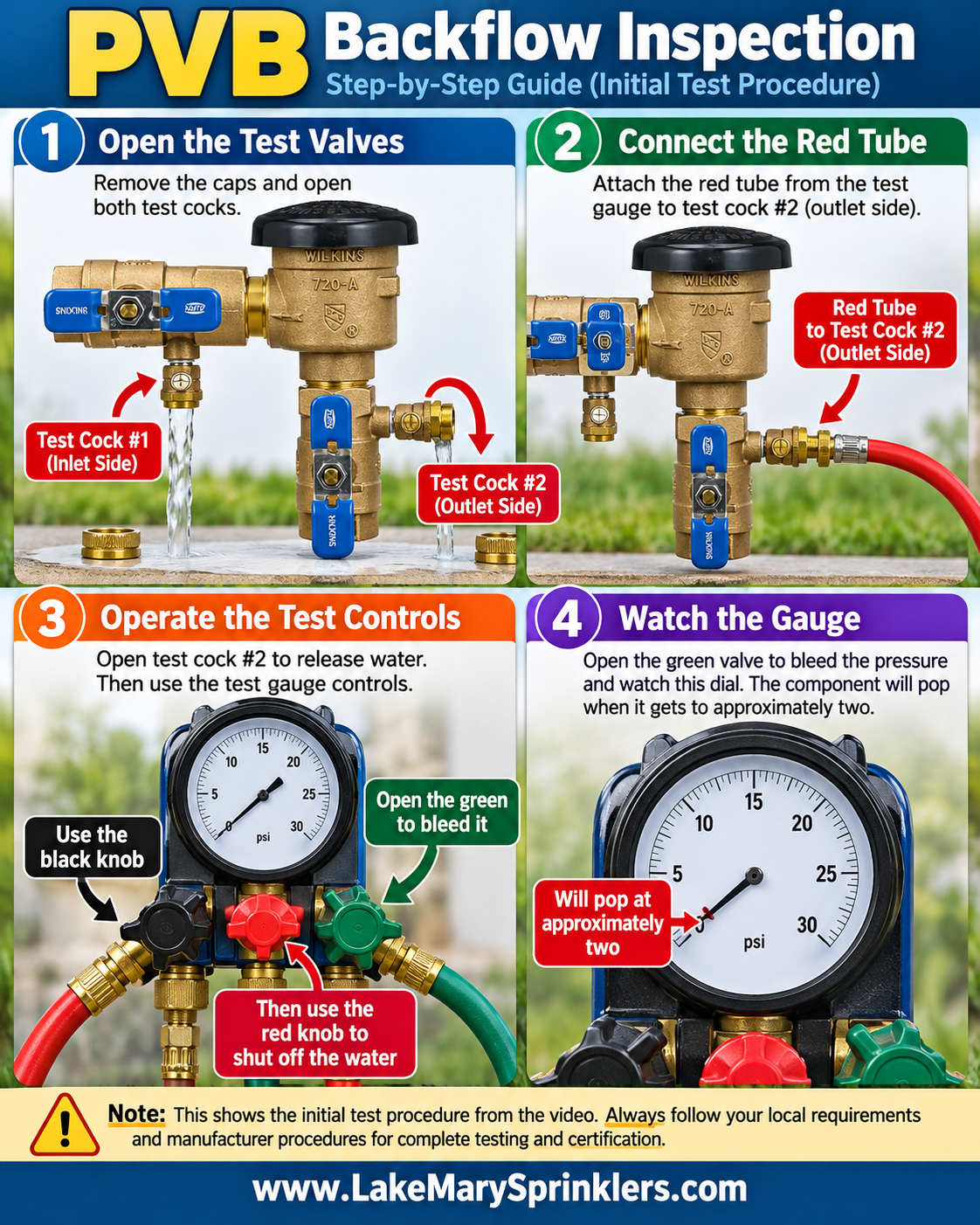
Pressure Vacuum Breakers (The Popular Choice)
PVBs are a step up. They can stay under pressure 24/7, which makes them way more practical for irrigation systems. They’ve got a check valve that stops reverse flow, plus an air inlet that opens up when pressure drops.
Here’s the catch – they need to be installed at least 12 inches above ALL your sprinkler heads. In flat Florida? That can be tricky. You might see these mounted on tall pipes sticking up in people’s yards. Not the prettiest thing, but they work.
Most cities in Central Florida require these for regular home sprinkler systems. Just make sure your installer gets that height right, or it won’t work properly.
Double Check Valve Assemblies (The Reliable Middle Ground)
Now we’re getting more serious. DCVAs have two check valves working independently. If one fails, the other’s got your back. They handle both back-pressure AND back-siphonage, which is huge.
These can go underground or in vaults, so they’re more hidden than PVBs. Florida homeowners use them for:
- Fire sprinkler systems
- Bigger irrigation setups
- Commercial-grade equipment
The downside? They need testing every year by someone who’s certified. Can’t just skip it – your water company will definitely notice.
Reduced Pressure Zone Devices (The Heavy Hitter)
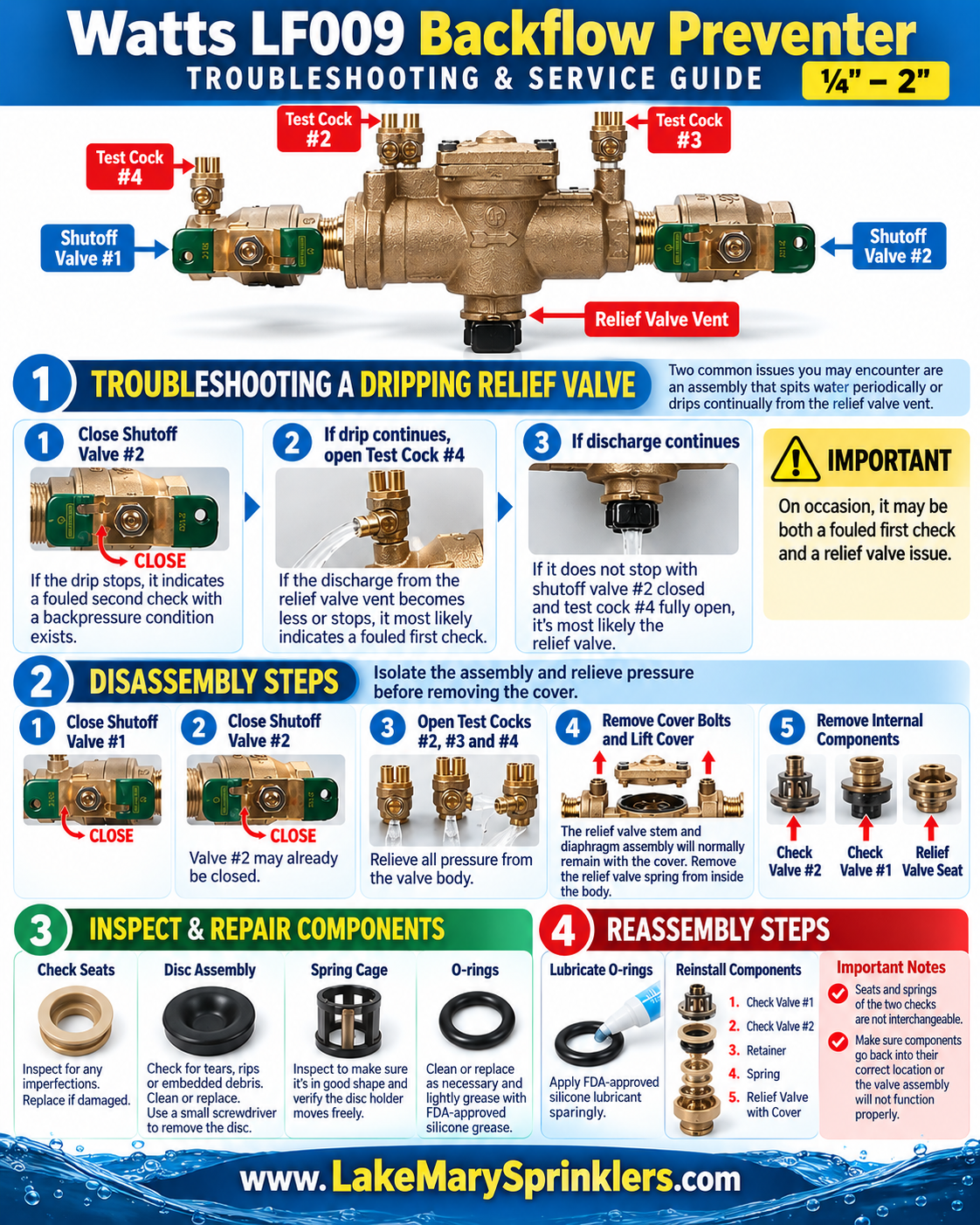
RPZ valves are the best protection you can get. They’re complex, they’re expensive, but they’re seriously effective.
Here’s what makes them special: two check valves with a pressure zone between them, plus a relief valve that dumps water if anything goes wrong. They protect against everything in high-risk situations.
Florida requires these for:
- Irrigation using reclaimed (recycled) water
- Pool systems with chemical feeders
- Properties with wells AND city water
- Anything considered high-hazard
They must be installed above ground where you can access them easily. And yes, annual testing is required. These aren’t cheap to install or maintain, but for high-risk situations, they’re non-negotiable.
What Central Florida Says You Need to Do
Central Florida covers a lot of ground – Orlando, Kissimmee, Sanford, all the surrounding areas. Each city has its own rules, but some things are pretty consistent everywhere.
Every city requires backflow prevention on irrigation systems. Period. Doesn’t matter if it’s a tiny system or a massive one. The fertilizers and pesticides people use on their lawns are serious contamination risks.
The Florida Building Code sets the baseline. But local cities? They usually make the rules stricter, not looser.
Most places require:
- Backflow devices at your main water connection if you have irrigation, pools, or similar setups
- Annual testing by certified professionals (not just any plumber)
- Test reports filed with your water company within 30 days
- Maintenance records kept on file
Miss your annual test? Some water companies will actually shut off your water. They’re not messing around.
How Requirements Change From County to County
This is where it gets interesting. Even though we’re all in Central Florida, each county does things a bit differently.
Orange County (Orlando Area)
Orange County keeps pretty tight control over backflow prevention. They want RPZ devices for anything using reclaimed water or considered high-hazard. Regular irrigation usually needs PVBs or DCVAs.
Since 2014, everything installed here needs to be lead-free according to federal standards. More on that later, but basically, they’re serious about keeping lead out of drinking water.
Seminole County
Seminole County has special rules if you’ve got a well AND city water. Those hybrid systems need extra protection to keep the two water sources from mixing.
Swimming pools get extra attention here too. Depending on your chemical system, you might need an air gap (physical separation) or an RPZ device. No shortcuts allowed.
Osceola County
Osceola requires you to submit your annual test reports online. They’ve made it digital, which is actually pretty convenient once you figure out their system.
They’ve also thought about flooding. Living in Florida, that’s smart. If you’re in a flood zone, they have specific rules about where and how you install backflow preventers.
Lake County
Lake County has lots of homes with private wells. Their rules reflect that reality – they’re really careful about places where well water and city water might connect.
They’ve also gone beyond federal lead-free requirements for sensitive places like schools and healthcare facilities. Extra testing, extra certifications, the works.
Polk County
Polk County straddles Central and Southwest Florida, so their rules are kind of a mix. They treat properties inside city limits differently from rural areas.
They’re big on requiring RPZ devices for high-risk situations. They also keep a public database of properties with backflow devices that need testing. Your neighbors can literally look up whether you’re keeping up with your testing.
The Lead-Free Situation
Lead in drinking water has become a huge deal nationwide. Remember Flint, Michigan? Nobody wants that.
Federal law now says “lead-free” means less than 0.25% lead in the parts that touch water. That’s for pipes, fittings, and yes – backflow preventers.
Every Central Florida county follows these federal rules at minimum. But some go further.
Orange and Seminole counties require lead-free devices for ALL new installations and replacements. Not just some. All of them.
They maintain approved device lists. Your plumber needs to check that list before buying anything. Inspectors will ask for proof during inspections.
Other counties like Miami-Dade and Broward (not Central Florida, but influential) require manufacturer certificates proving compliance. That paperwork follows the device from factory to installation.
Why does this matter to you? If you’re replacing a backflow preventer, make sure your plumber isn’t using old stock that doesn’t meet current standards. It might be cheaper, but it won’t pass inspection.
Installation, Testing, and Keeping Everything Working
You need a licensed plumber or certified backflow technician to install these devices. Not your handy neighbor. Not a YouTube tutorial. A licensed professional. Technically even sprinkler system contractors are not allowed to install them.
The device needs to be:
- Easy to access for testing
- Installed exactly how the manufacturer says
- Located where there’s room to hook up test equipment
- Protected from damage
Annual testing is mandatory for DCVAs and RPZ devices. Your water company will send you reminders. Don’t ignore them.
The testing process uses special gauges to make sure everything’s working right. Testers need to be certified – they’ve taken classes and passed tests to do this work.
Regular maintenance is pretty simple:
- Check for leaks occasionally
- Look for visible damage
- Make sure nothing’s blocking access
- Watch for the relief valve on RPZ devices to discharge water sometimes (that’s normal)
In most of Florida, freezing isn’t a big concern. But if you’re in North Florida during a cold snap, some protection might help.
The Bottom Line
Backflow prevention isn’t the most exciting topic. But it’s important. Really important.
Florida’s growing like crazy. Water is getting more precious. The rules around backflow prevention are probably going to get stricter, not looser.
If you’re a homeowner:
- Know what type of device you have
- Keep up with annual testing
- Use certified professionals
- Make sure any replacements are lead-free
If you’re buying a home:
- Ask about backflow prevention devices
- Check when they were last tested
- Factor testing costs into your budget
The good news? Once everything’s installed correctly, it’s pretty low-maintenance. Just don’t skip that annual test. Your water company is watching, and more importantly, your family’s health depends on clean water.
Work with professionals who know your county’s specific rules. What flies in Orange County might not work in Polk County. Local knowledge matters.
Stay safe. Stay compliant. Keep your water clean.